Istanbul Economic History: From Byzantine to Ottoman Eras
Delving into the rich tapestry of Istanbul economic history offers a fascinating journey through empires, trade routes, and unparalleled prosperity. From its strategic perch between continents, Istanbul, formerly Constantinople and Byzantium, has long been a crucible of commerce and culture. This vibrant city, a focal point of global attention even in 2026, continues to reveal layers of its intricate past, showcasing how economic forces shaped its destiny for millennia.
For those interested in the grand scale of the city's development and its foundational infrastructure, exploring Istanbul's Ancient Engineering: Unveiling Roman Roads, Byzantine Bridges & Ottoman Aqueducts in 2026 provides a deeper dive into the physical backbone that supported its economic might.
The Byzantine Era: Cradle of Medieval Commerce and Istanbul Economic History
The economic prowess of the Byzantine Empire, centered in Constantinople, was legendary for centuries. Its control over crucial land and sea routes made it the undisputed economic powerhouse of the medieval world. The city's sophisticated financial systems and manufacturing capabilities were unparalleled, significantly shaping Istanbul economic history.
Under Emperor Constantine I, who refounded the city in 330 AD, Byzantium quickly grew into a bustling metropolis. Its strategic location controlled access to the Black Sea and the Mediterranean, making it a critical hub for trade between East and West. This geographical advantage laid the foundation for much of Istanbul economic history.
The Strengths of Byzantine Economy
- Strategic Location: Situated at the crossroads of Europe and Asia, controlling vital trade routes.
- Advanced Coinage: The gold solidus was the international currency for over 700 years, synonymous with stability and trust.
- State-Controlled Industries: Particularly in luxury goods like silk, which was a state monopoly, ensuring high quality and revenue.
- Agricultural Foundation: Rich agricultural lands in Anatolia provided essential foodstuffs and raw materials.
- Sophisticated Banking: Early forms of banking and credit systems supported extensive commercial activities.
The city's markets were vibrant, offering goods from across the known world. Spices from India, silks from China, furs from Russia, and myriad other commodities passed through its port and bazaars. This sustained period of prosperity firmly established Byzantium's importance in global trade, cementing a significant chapter in Istanbul economic history. To learn more about the intricate organization behind these commercial activities, delve into Istanbul's Ancient Guilds and Crafts: Unveiling the Economic Engine of a Metropolis in 2026.
Ottoman Empire: Reshaping Global Trade and Urban Development
With the conquest of Constantinople by Sultan Mehmed II in 1453, the city entered a new golden age as the capital of the Ottoman Empire. The Ottomans inherited a city with immense economic potential and quickly set about revitalizing its infrastructure and trade networks. The shift from Byzantine to Ottoman rule marked a transformative period in Istanbul economic history.
The Ottomans actively fostered trade and industry, welcoming merchants and artisans from diverse backgrounds. This open-economic approach led to a resurgence of commercial activity and the city’s population swelled, reflecting its growing economic MAGNETISM.
Key Economic Pillars of the Ottoman Period
- Reconstruction and Investment: Sultan Mehmed II poured resources into rebuilding and enhancing the city's infrastructure, including markets, bridges, and fortifications.
- Kapalıçarşı (Grand Bazaar): One of the world's oldest and largest covered markets, a testament to Ottoman commercial ambition, thriving even in 2026.
- Spice and Silk Roads: Istanbul became a key intermediary for trade between Europe, Asia, and Africa, benefiting from its control over the remnants of these ancient routes.
- Guild System (Ahi Organization): Regulated various crafts and trades, ensuring quality, fair prices, and social welfare among artisans.
- Fiscal System: A complex system of taxation, customs duties, and state-controlled monopolies funded the vast empire and its capital.
The sheer volume of goods flowing through Istanbul, coupled with its role as an administrative and cultural center, meant that its economic influence radiated far and wide. The city's economic activities were a central component of the empire's power and longevity, truly emphasizing its pivotal role in Istanbul economic history. Many of these economic activities relied on effective communication, much like the Unearthing Hidden Knowledge in Ancient Archives that documented these transactions.
The Silk Road and Maritime Connections: Lifelines of Istanbul's Economy
Both under Byzantine and Ottoman rule, Istanbul's strategic position at the intersection of major trade routes was its most significant economic asset. The city served as a critical nexus for both the fabled Silk Road and extensive maritime networks, profoundly shaping Istanbul economic history.
The Silk Road, a network of trade routes connecting East and West, brought invaluable goods like silk, spices, porcelain, and precious stones to Istanbul. Conversely, it facilitated the westward flow of European manufactured goods. The city’s port became a conduit for vast quantities of goods, a testament to the enduring importance of trade in Istanbul economic history. For more on the crucial role of its waters, explore Istanbul's 'Coastal Chronicles': Unveiling the Maritime History and Unseen Shorelines in 2026.
Major Trade Routes and Their Impact
- Land Routes: Connecting to Persia, Central Asia, and beyond, primarily for luxury goods.
- Black Sea Routes: Linking to Russia and Eastern Europe, crucial for furs, timber, and grains.
- Mediterranean Routes: Connecting to Italy, Egypt, and the Levant, exchanging textiles, metals, and agricultural products.
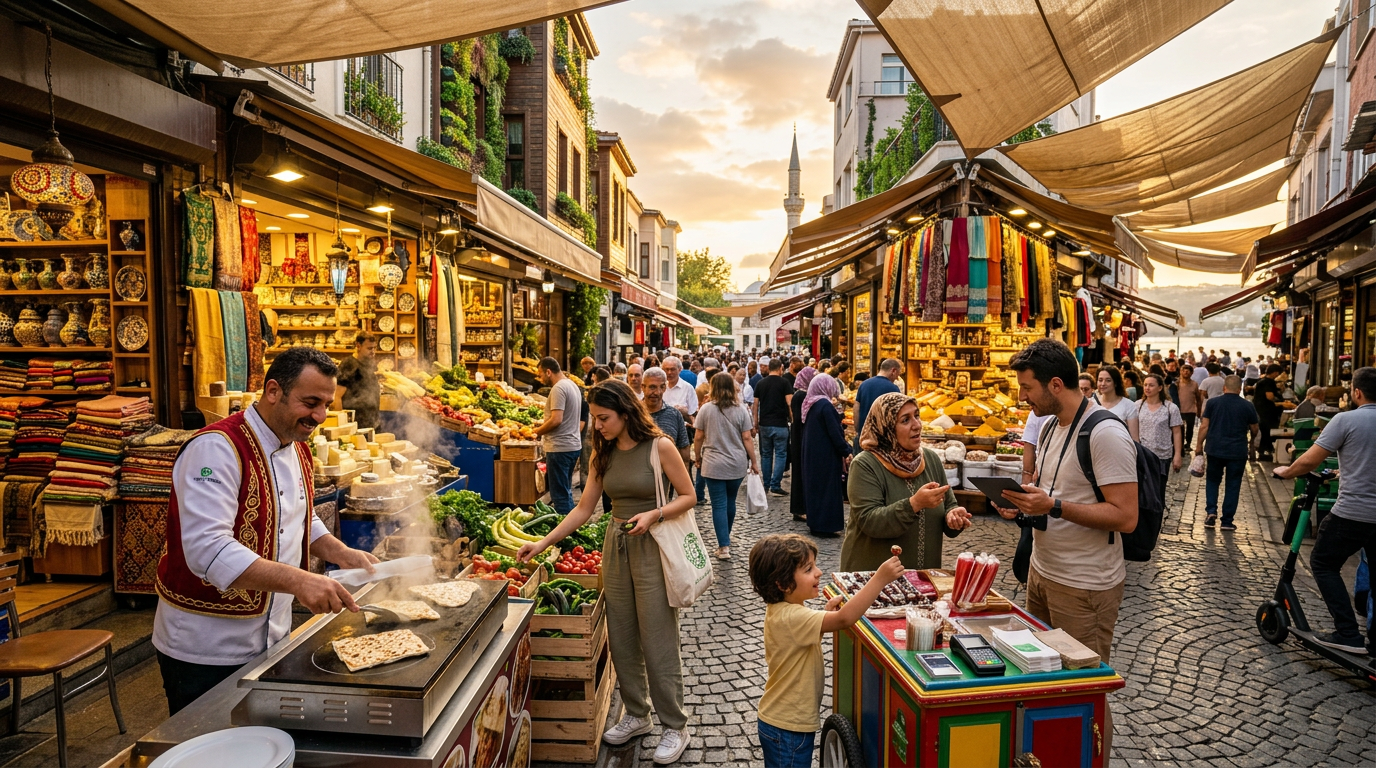
The constant flow of merchants, goods, and capital not only enriched the city but also fostered a unique multicultural environment. This confluence of cultures and economies is still evident in Istanbul's bustling markets and historic districts today, reflecting its deep commercial roots. The economic history of Istanbul is intricately woven with these global arteries. For further insight into the global impact of these trade networks, resources such as the Heilbrunn Timeline of Art History from The Metropolitan Museum of Art can offer broader context on the Silk Road.
Challenges and Resilience: Adapting to Change in Istanbul Economic History
While often prosperous, Istanbul economic history was not without its challenges. Plagues, internal conflicts, and shifts in global trade dynamics – such as the Age of Discovery and the rise of Atlantic trade – tested the city's resilience. Yet, Istanbul consistently adapted, demonstrating remarkable economic fortitude.
The discovery of new sea routes to Asia significantly impacted traditional overland trade, leading to a realignment of economic power away from the Mediterranean. However, Istanbul, leveraging its internal markets and regional dominance, managed to maintain its economic relevance. The Ottoman administration implemented reforms and sought new trade partnerships to mitigate these external pressures, further shaping Istanbul economic history.
Responding to Economic Shifts
The city's ability to reinvent itself, from a Byzantine stronghold to an Ottoman capital, and now a modern global city in 2026, speaks volumes about its enduring economic dynamism. Its resilience is a key theme in the long and varied Istanbul economic history. Despite facing numerous obstacles over centuries, the city has maintained its vitality and continues to be a major economic player in the region. For additional academic insights on the economic trajectories of major historical empires, the Journal of Economic History offers a wealth of research.
Understanding these historical economic patterns not only enriches our appreciation for Istanbul's past but also provides context for its current position as a vibrant economic hub in 2026. The echoes of its ancient fortunes can still be found in its bustling markets, historic infrastructure, and the entrepreneurial spirit of its people. The current economic landscape of Turkey, with Istanbul at its heart, can be explored through recent reports from institutions like the World Bank, detailing its economic outlook for 2026 and beyond.