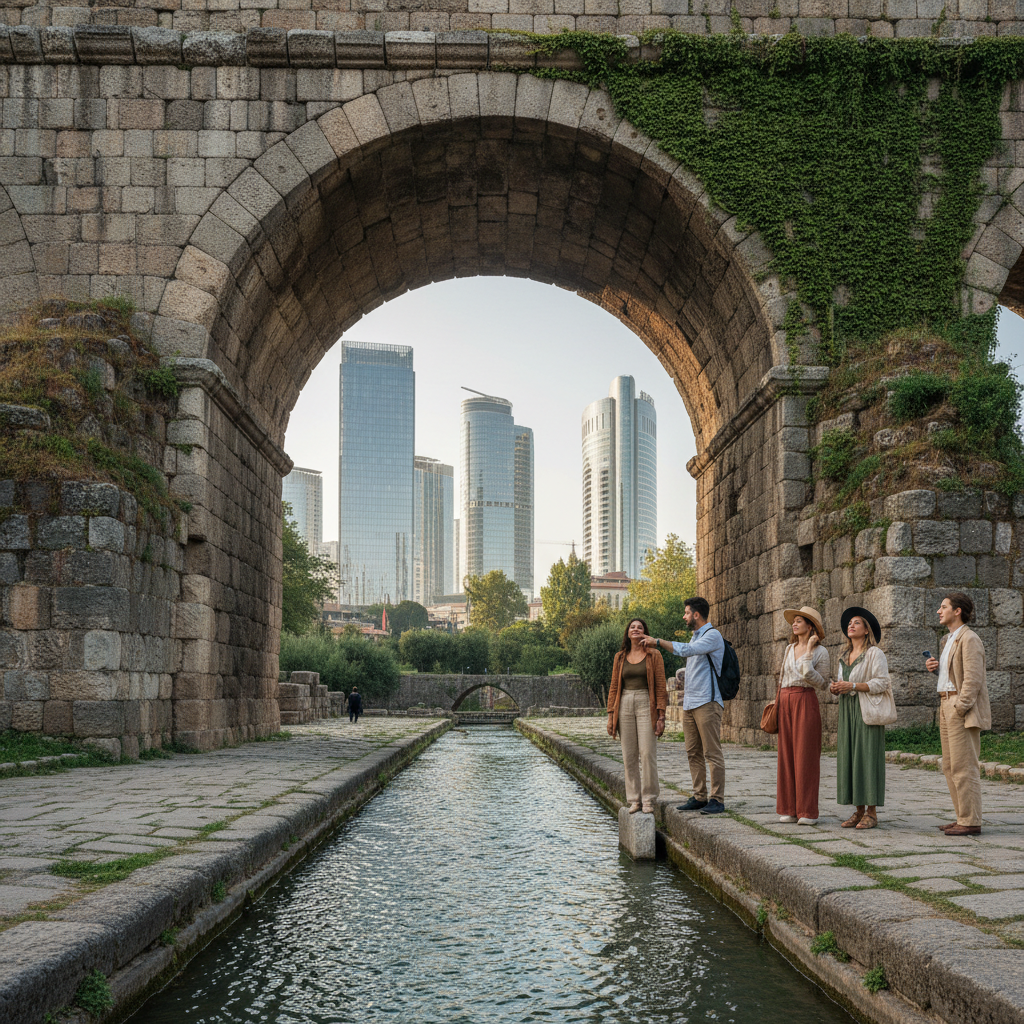
Istanbul's Ancient Waterways: Exploring Historic Aqueducts, Cisterns, and Fountains
As we navigate through 2026, the allure of Istanbul's rich history remains ever-present, captivating visitors with its remarkable heritage. Among its most fascinating elements are the Istanbul's ancient waterways, a sophisticated network of aqueducts, cisterns, and fountains that quenched the thirst of empires for millennia. These engineering marvels not only testify to the ingenuity of past civilizations but also offer a unique glimpse into the daily life and strategic planning of Constantinople and its predecessors. From the majestic Roman aqueducts to the sprawling underground cisterns, exploring these sites provides an unparalleled journey through time, revealing the secrets of how this grand city sustained its populace. Discover the enduring legacy of Istanbul ancient waterways and their vital role in shaping the city.
The Roman Legacy: Aqueducts Supplying Istanbul's Ancient Waterways
The foundation of Istanbul's elaborate water system can be largely attributed to the Roman Empire. Recognizing the strategic importance of the city, then Byzantium, Roman emperors invested heavily in infrastructure designed to ensure a consistent water supply for their burgeoning capital. These impressive structures facilitated the growth and prosperity that defined the city for centuries, forming a crucial part of Istanbul ancient waterways.
Valens Aqueduct: A Prominent Landmark
Standing proudly in the heart of Istanbul, the Valens Aqueduct (Bozdoğan Kemeri) is perhaps the most iconic example of Roman hydraulic engineering. Constructed in the late 4th century AD by Emperor Valens, this double-tiered structure once stretched for nearly a kilometer, channeling water from distant sources into the city's reservoirs. Today, its impressive arches continue to dominate the cityscape, a testament to the enduring power of its design and its contribution to Istanbul ancient waterways.
- Construction date: 368 AD - 375 AD
- Original length: Over 900 meters
- Sources: Belgrad Forest and springs north of the city
- Function: Supplied water to various cisterns and fountains
In 2026, the Valens Aqueduct remains a vibrant part of Istanbul, with traffic flowing beneath its ancient arches. It's a powerful reminder of how ancient infrastructure continues to serve modern urban needs, seamlessly blending with contemporary life while whispering tales of Byzantium. For more on the city's architectural evolution, see Istanbul's Time-Bending Architecture.
Other Notable Roman Aqueducts
While Valens is the most famous, many other aqueducts and lesser-known channels contributed to the supply of Istanbul's ancient waterways. These often lay hidden, integrated into the landscape, or were later reused and modified by subsequent empires. Their remnants are scattered across the city's outskirts, waiting to be discovered by intrepid explorers, offering a glimpse into Istanbul's Abandoned Wonders.
Byzantine Ingenuity: The Cisterns of Constantinople
To store the vast quantities of water brought in by the aqueducts, the Byzantine emperors commissioned the construction of numerous underground cisterns. These subterranean marvels were not merely functional; they were often architectural masterpieces, designed with remarkable aesthetic considerations. These cisterns were crucial for the city's survival during sieges, ensuring a reliable water source even when external supplies were cut off. They form an integral part of the Istanbul's ancient waterways system.
Basilica Cistern: An Underground Wonderland
The Basilica Cistern (Yerebatan Sarnıcı) is undoubtedly the most famous of Istanbul's underground reservoirs. Built in the 6th century AD by Emperor Justinian I, it could hold up to 80,000 cubic meters of water. Its dimly lit interior, supported by 336 marble columns, creates an ethereal atmosphere. The inverted Medusa heads, repurposed from earlier Roman structures, add to its mystique, showcasing another facet of Istanbul ancient waterways.
- Capacity: Approximately 80,000 cubic meters
- Columns: 336, each 9 meters high
- Key features: Medusa head bases, "Crying Column"
- Current status in 2026: Fully restored and open to visitors
As of 2026, the Basilica Cistern remains a top tourist attraction, drawing millions with its captivating history and stunning visuals. Recent renovations have further enhanced the visitor experience, making it an even more immersive journey into the heart of Byzantine engineering. Its historical significance and mystical elements are often subjects of Istanbul's Urban Legends & Mythical Charms.
Theodosius Cistern and Other Hidden Gems
Less known but equally significant is the Theodosius Cistern (Şerefiye Sarnıcı), also recently reopened to the public. Dating back to the 5th century AD, it offers a distinct architectural style and a quieter, more reflective atmosphere compared to its famous counterpart. Numerous other smaller cisterns lie hidden beneath residential buildings and historical sites across the city, silently preserving their secrets, all part of the grand network of Istanbul ancient waterways.
Ottoman Contributions to Istanbul's Ancient Waterways
Following the conquest of Constantinople in 1453, the Ottoman Empire inherited and expanded upon the existing Byzantine water infrastructure. Ottoman sultans understood the vital importance of a clean and abundant water supply for their growing capital and invested heavily in repairing, extending, and creating new systems. This continuity highlights the enduring significance of Istanbul's ancient waterways across different eras.
Kırkçeşme Water Supply System
One of the most ambitious Ottoman water projects was the Kırkçeşme (Forty Fountains) water supply system, commissioned by Suleiman the Magnificent in the 16th century. Designed by the legendary architect Mimar Sinan, this system comprised several aqueducts and channels that brought water from the Belgrade Forest to the city. Its construction ensured that Istanbul could sustain a rapidly expanding population, further developing the legacy of Istanbul ancient waterways.
- Architect: Mimar Sinan
- Commissioned by: Suleiman the Magnificent
- Date: Mid-16th century
- Features: Numerous aqueducts, reservoirs, and public fountains
Many of Sinan's aqueducts, such as the Mağlova Aqueduct, are still visible on the city's outskirts, standing as magnificent examples of Ottoman engineering prowess. They are often overlooked by visitors but offer a profound understanding of the city's hydrological history. You can find out more about these impressive structures and their enduring legacy at the Mimar Sinan and the Ottoman Water Supply Website.
Public Fountains (Çeşmeler)
The Ottoman era also saw the proliferation of beautiful public fountains (Çeşmeler) throughout Istanbul. These ornate structures were not just sources of water; they were also social hubs and architectural jewels, often adorned with intricate calligraphy and tilework. They were built for public utility and as acts of charity, reflecting the Islamic principle of providing water to all.
Many of these historic fountains, like the Fountain of Ahmed III near Topkapi Palace, continue to charm visitors in 2026 with their elegant designs and historical significance. They represent the final distribution points of the elaborate Istanbul's ancient waterways. These artistic details are reminiscent of the vanishing trades of Istanbul.
Preservation Efforts and Modern Day Significance for Istanbul Ancient Waterways
Understanding and preserving Istanbul's ancient waterways is more crucial than ever in 2026. These historical infrastructures offer invaluable insights into sustainable urban planning and water management techniques predating modern technology. Their continued existence serves as a living museum of human ingenuity and adaptation.
Ongoing Restoration Projects
Recent years have seen increased efforts in restoring and maintaining Istanbul's historical water systems. Projects like the renovations of the Theodosius Cistern and ongoing archaeological work around the aqueduct routes ensure that these treasures are protected for future generations. These initiatives blend historical accuracy with modern conservation techniques to maintain the integrity of the sites. Further information on water management in historical contexts can be found from academic sources such as JSTOR on Ancient Water Systems.
Educational Tourism and Heritage Protection
Visitors in 2026 can engage with these ancient sites through enhanced educational tourism programs. Guided tours often delve into the engineering feats and historical contexts, making the experience both informative and engaging. Protecting these sites also involves strict urban planning regulations to prevent damage from modern development, ensuring that the ancient water heritage of Istanbul remains intact. For those interested in exploring these historical narratives further, consider Istanbul's Time-Traveling Trails.
The intricate network of Istanbul's ancient waterways, from the grand Valens Aqueduct to the silent underground cisterns and the ornate Ottoman fountains, tells a story of survival, innovation, and continuous adaptation. Exploring these historical sites offers a profound connection to the past and underscores the timeless significance of water in the life of this extraordinary city. The legacy of Istanbul ancient waterways continues to inspire and educate.