Istanbul entrepreneurship history: From Ancient Bazaars to Modern Startups
Delving into Türkiye's vibrant past offers a unique perspective on its present entrepreneurial spirit. Specifically, understanding the Istanbul entrepreneurship history is crucial for anyone exploring the city's economic evolution. From the bustling Grand Bazaar to the strategic caravanserai routes, Istanbul has, for centuries, been a crucible of trade, innovation, and business acumen. This rich legacy continues to shape the city's dynamic startup ecosystem in 2026, making it a fascinating case study for historical and modern entrepreneurship.
The Genesis of Trade: Unpacking Early Istanbul Entrepreneurship History
The foundations of commercial activity in Istanbul – formerly Constantinople – were laid well over a millennium ago. Its strategic geographical position, straddling two continents, made it an unavoidable nexus for trade routes connecting East and West. This prime location fostered an environment where merchants, artisans, and innovators converged, leading to an early form of Istanbul entrepreneurship history.
Byzantine Commercial Hubs
During the Byzantine era, Constantinople was the heart of a vast empire, and its economy reflected this dominance. The city boasted specialized markets and guilds, each contributing to a sophisticated economic system.
- Forum of Theodosius: A major public square and commercial center.
- Mese (Main Street): Lined with shops and traders offering a diverse array of goods.
- Guild System: Organized craftsmen and merchants, ensuring quality and regulating trade practices.
These early structures provided the groundwork for complex commercial dealings that would continue to evolve under subsequent empires. For a deeper dive into the city's ancient layers, explore Istanbul's Ancient Palimpsest: Unearthing Layers of Forgotten Cities Beneath the Modern Metropolis in 2026.
Ottoman Catalysts: Bazaars, Caravanserais, and Guilds in Istanbul's Entrepreneurship History
With the Ottoman conquest in 1453, Istanbul's commercial landscape was revitalized and expanded. The Ottomans, recognizing the city's unparalleled potential, invested heavily in infrastructure that supported and encouraged further entrepreneurial endeavors. This period marks a significant chapter in Istanbul entrepreneurship history.
The Grand Bazaar: A Microcosm of Ancient Commerce
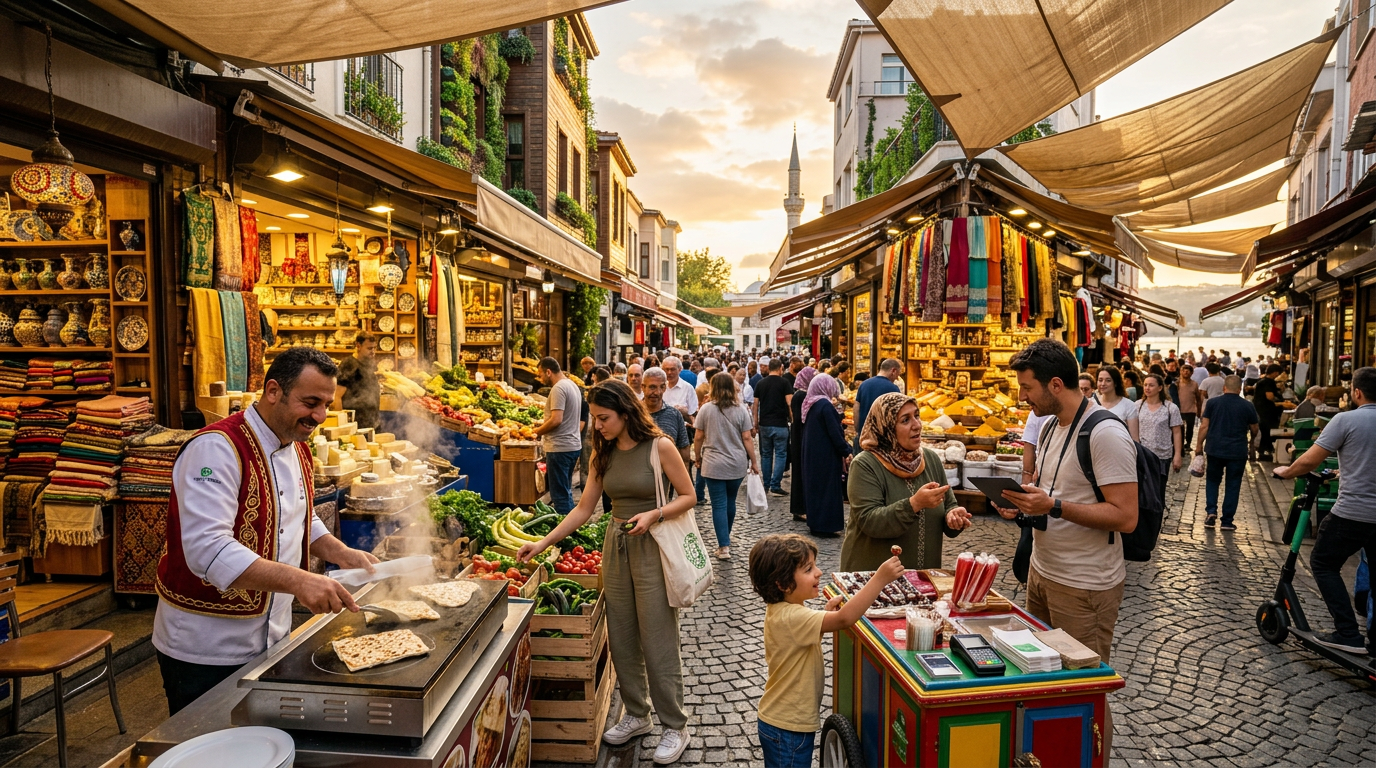
The Grand Bazaar (Kapalıçarşı) stands as a monumental testament to Istanbul's enduring commercial spirit. Established shortly after the conquest, it quickly became one of the largest and oldest covered markets in the world. It wasn't just a place for buying and selling; it was a vibrant ecosystem of finance, craftsmanship, and international trade.
- Diverse Goods: From spices and textiles to jewelry and carpets, the Bazaar offered everything imaginable.
- Financial Hub: Money changers, jewelers, and bankers operated within its walls, facilitating complex transactions.
- Socio-Economic Structure: Organized into separate sections for different trades, reflecting a sophisticated commercial hierarchy.
Each shop, each workshop within the Bazaar, represented an independent entrepreneurial venture, operating within a larger, regulated framework.
Caravanserais: Rest Stops for Trade and Innovation
Caravanserais (Hans) were vital to the long-distance trade networks that fueled Istanbul's economy. These fortified roadside inns provided lodging for merchants, their animals, and their goods. More than just rest stops, they were centers for information exchange, networking, and even new product development.
Often, caravanserais in Istanbul had specific functions, such as the Vezir Han, known for its textile trade, or the Kurkcu Han for furriers. These establishments were entrepreneurial ventures in themselves, often privately owned or granted by imperial decree, generating significant income for their proprietors. For more about the city's historical passages, consider reading about Istanbul's Ancient Postal Routes: Unearthing Communication Networks & 2026's Digital Threads.
The Esnaf (Guild) System
The Ottoman guild system, or Esnaf, played a crucial role in regulating trade and production, fostering both competition and cooperation among artisans and merchants. These guilds ensured quality control, set prices, and provided social welfare for their members. While seemingly restrictive, they also empowered individual craftsmen by giving them a collective voice and protecting their livelihoods.
The Esnaf system showcases an early form of structured business environment, where individual entrepreneurial efforts were supported by a larger organizational framework, defining another aspect of Istanbul entrepreneurship history. Discover more about these traditional structures in Istanbul's Ancient Guilds: Unveiling the City's Crafting Secrets and Enduring Artisanal Spirit in 2026.
Transitioning to Modernity: The Republic Era and Beyoğlu's Rise in Istanbul's Entrepreneurship
As the Ottoman Empire waned and the Turkish Republic emerged in the early 20th century, Istanbul's entrepreneurial landscape began to shift. While the historic core around the Golden Horn remained significant, new commercial centers emerged, reflecting Western influences and modern business practices.
Beyoğlu: A Glimpse into European Commerce
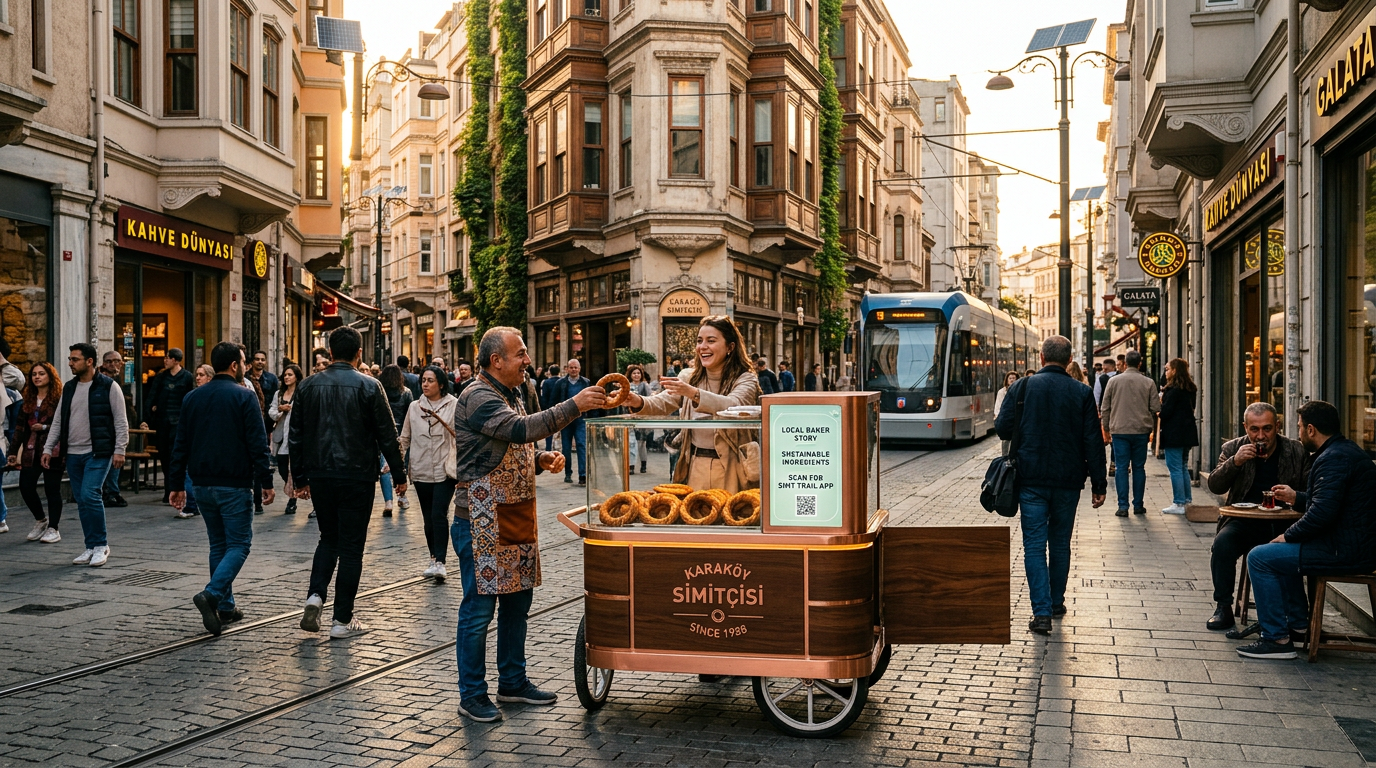
Beyoğlu, particularly İstiklal Caddesi, became the epicenter of modern commerce and culture. European department stores, foreign banks, and upscale boutiques characterized this district, introducing new forms of retail and financial entrepreneurship.
This period saw the rise of modern corporations, advertising agencies, and service-based businesses, marking a departure from the traditional bazaar model. It was a time of adaptation and innovation, crucial for the development of modern Istanbul entrepreneurship history.
Industrialization and National Enterprise
The early Republic years focused on industrialization and establishing national enterprises. State-owned factories and banks played a significant role, but private individuals and families also began building their industrial empires, particularly in textiles, food processing, and construction. This laid the groundwork for today's diverse private sector.
Istanbul's Entrepreneurial Spirit in 2026: A Global Hub for Innovation
Fast forward to 2026, and Istanbul stands as a thriving hub for innovation and entrepreneurship, drawing on its deep historical roots while embracing cutting-edge technologies. The city consistently ranks high globally for its startup ecosystem and investment opportunities. According to recent reports, Istanbul has firmly established itself as a leading startup hub in Southeast Europe and MENA regions, attracting significant venture capital in 2025 and early 2026, with a vibrant scene for tech innovation as highlighted by Startup Genome's ecosystem reports. This modern era continues to write new chapters in Istanbul entrepreneurship history.
Tech Startups and Innovation Hubs
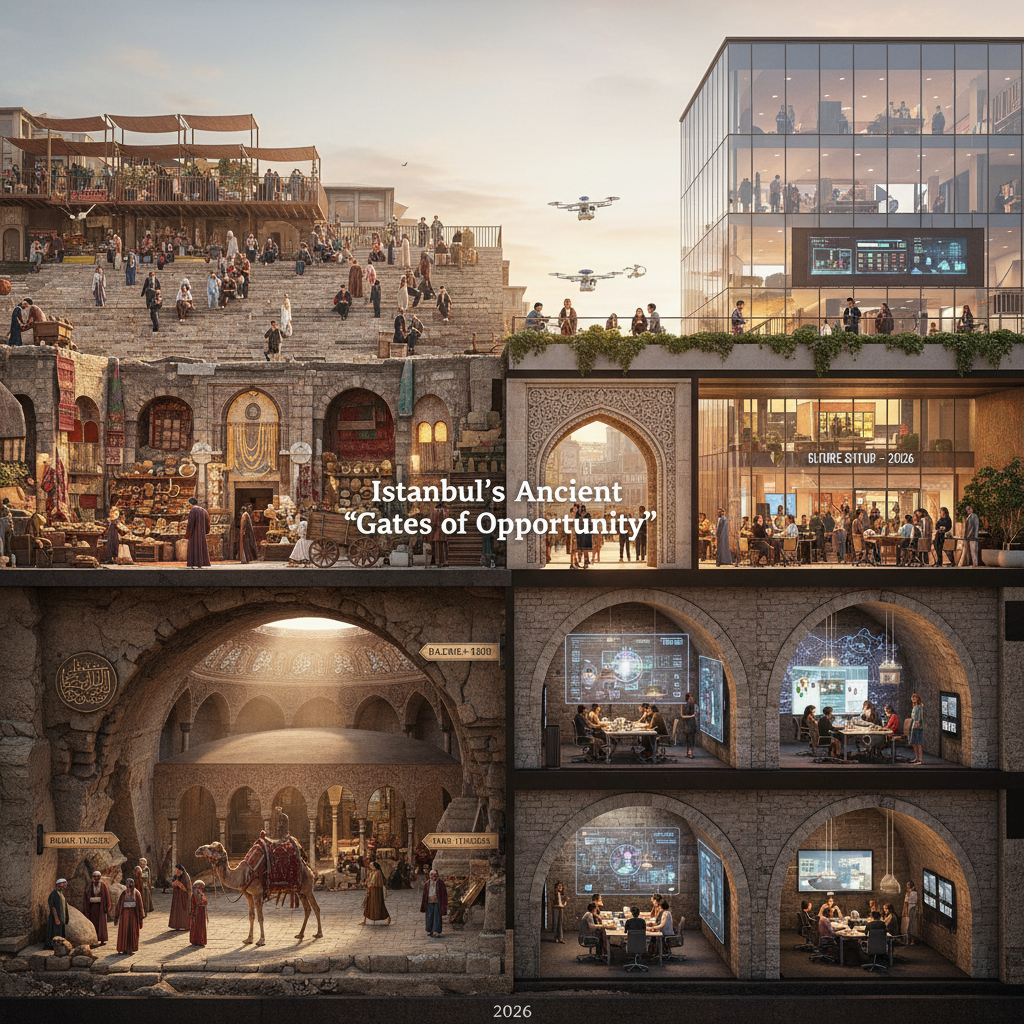
Istanbul's tech scene is booming. With a young, digitally-savvy population and increasing access to venture capital, the city is home to numerous successful startups in fintech, e-commerce, gaming, and AI. Co-working spaces and incubator programs are burgeoning, fostering a collaborative environment reminiscent of the old caravanserais, albeit with a modern twist. The rise of "third spaces" for modern work and collaboration is a notable trend, which you can learn more about in Istanbul's 'Third Space' Sanctuaries: Unveiling Co-working, Creative Hubs & Community Cafes in 2026.
- Major Funding Rounds: 2025 and early 2026 saw significant investment in Istanbul-based tech companies.
- Globally Recognized Unicorns: Several Istanbul startups have achieved unicorn status, showcasing their international potential.
- Government Support: Initiatives and incentives are in place to encourage foreign investment and local innovation.
The city's strategic location remains an advantage, providing a bridge between European, Asian, and African markets, making it an attractive destination for global expansion.
E-commerce and Digital Transformation
The traditional exchange of goods in the Grand Bazaar has found its 21st-century equivalent in Istanbul's vibrant e-commerce sector. Digital marketplaces and online retail platforms are flourishing, enabling a broader reach than ever before. This digital transformation further extends the enduring legacy of Istanbul entrepreneurship history.
Education and Talent Pool
Istanbul boasts numerous reputable universities that produce a strong pipeline of talented graduates in engineering, business, and design. This skilled workforce is a critical component of the city's entrepreneurial success, fueling innovation and growth across various sectors. For instance, Boğaziçi University and Koç University are renowned for their contributions to technology and business education.
The Enduring Legacy of Istanbul Entrepreneurship History
The journey through Istanbul entrepreneurship history reveals a continuous thread of adaptability, innovation, and strategic foresight. From the intricate dealings of Byzantine markets and the grand scale of Ottoman bazaars to the dynamic tech startups of 2026, Istanbul has consistently reinvented itself as a commercial powerhouse.
The city's past isn't just a relic; it's a living blueprint for its future. The entrepreneurial spirit that once animated the caravanserai merchants now drives app developers and fintech innovators. Visitors to Istanbul today can still feel this vibrant past, whether walking through the labyrinthine passages of the Grand Bazaar or gazing at the gleaming skyscrapers that house the latest tech behemoths. Istanbul truly remains a city of opportunity, continuously building on its rich entrepreneurial heritage.