Istanbul's Ancient Frescoes & Modern Graffiti: Unveiling the City's Layered Art History in 2026
Stepping into Istanbul is like traversing a living museum, where every corner whispers tales of empires and artistic innovation. From the Byzantine mosaics that shimmer in ancient basilicas to the vibrant street art adorning contemporary walls, the city's artistic narrative is as rich and complex as its history. This article delves deep into Istanbul art history, exploring the myriad artistic expressions that have flourished here over millennia, providing a captivating journey for art enthusiasts and curious travelers alike visiting in 2026.
The Foundations of Istanbul Art History: Byzantine Brilliance
The Byzantine era represents a golden age in Istanbul art history, leaving an indelible mark on the city's architectural and artistic landscape. The fusion of Roman structure with Christian iconography gave birth to an entirely new aesthetic. For a deeper dive into the architectural marvels of this period, explore Istanbul's Ancient Palaces & Forgotten Harem Stories.
The Hagia Sophia and the Chora Church stand as prime examples of this period's artistic prowess. Their interior decorations featuring resplendent mosaics and frescoes continue to awe visitors to this day.
Hagia Sophia: A Testament to Early Christian Art
Originally a church, then a mosque, and now a mosque again, the Hagia Sophia has witnessed countless transformations, each leaving its artistic imprint. Its Byzantine mosaics, some dating back to the 9th century, depict Christ, the Virgin Mary, various emperors, and empresses.
- The Deësis Mosaic is particularly renowned for its emotional depth and realistic portrayal. It portrays Christ Pantocrator flanked by the Virgin Mary and John the Baptist, interceding on behalf of humanity.
- Restoration efforts continue to reveal new layers of its artistic past, offering fresh insights into Byzantine craftsmanship in 2026.
Chora Church (Kariye Museum): Narrative Masterpieces
Often considered one of the most beautiful examples of Byzantine artistry, the Chora Church, now the Kariye Mosque, is celebrated for its intricate frescoes and mosaics. These artworks illustrate biblical narratives with remarkable detail and intensity, offering a visual sermon to the faithful. You can learn more about Istanbul's Time-Traveling Decor to understand the broader context of Byzantine design.
The church’s cycle of mosaics detailing the life of the Virgin Mary and the early life of Christ are particularly stunning. Their vibrant colors and expressive figures are a testament to the sophistication of Byzantine artists.
Ottoman Art and Architecture: A Cultural Synthesis
Following the conquest of Constantinople in 1453, the Ottoman Empire ushered in a new era for Istanbul art history. Ottoman artists and architects drew inspiration from Byzantine, Persian, and Islamic traditions, forging a unique style characterized by grandeur, intricate ornamentation, and a deep appreciation for symmetry.
Mosques, palaces, and public baths became canvases for exquisite tile work, calligraphy, and decorative arts. The Blue Mosque and Topkapi Palace are iconic examples of this period's artistic achievements.
The Blue Mosque: Iconic Tile Work and Grandeur
Sultan Ahmed Mosque, famously known as the Blue Mosque, is a masterpiece of Ottoman architecture. Its interior is adorned with more than 20,000 handmade İznik ceramic tiles, predominantly blue, which give the mosque its popular name.
These tiles feature traditional Ottoman floral patterns, such as tulips, carnations, and roses, alongside intricate geometric motifs. The mosque's numerous stained-glass windows further illuminate the dazzling interior.
Topkapi Palace: A Repository of Ottoman Artistic Heritage
For centuries, Topkapi Palace served as the primary residence of Ottoman sultans. Its various courtyards, pavilions, and chambers are adorned with magnificent tiles, calligraphic panels, and decorative carvings, reflecting the opulent lifestyle of the Ottoman court.
The palace's extensive collections of imperial treasures, including illuminated manuscripts, miniature paintings, and intricate jewelry, provide invaluable insights into the diverse facets of Ottoman artistic expression. These collections continue to be a major highlight for those interested in Istanbul art history. For a related historical perspective, consider exploring Istanbul's Ancient Libraries & Unseen Scrolls.
The Crossroads of East and West: 19th & 20th Century Artistic Currents
The 19th and early 20th centuries saw Istanbul art history navigating the influences of both Westernization and a renewed interest in local traditions. This period was marked by the emergence of new art forms and institutions, as well as a growing engagement with European artistic movements.
Painting, in particular, saw a significant transformation, moving from traditional miniature styles towards more realistic and academic approaches. Art academies and exhibition spaces began to proliferate across the city.
The Rise of Western-Influenced Painting
Turkish artists increasingly traveled to European art centers like Paris and Rome, bringing back new techniques and styles. Artists like Osman Hamdi Bey became pioneers in establishing a distinct Turkish school of painting, merging Orientalist themes with Western academic realism.
- His painting The Tortoise Trainer (1906) is a celebrated example, depicting a dervish figure in an Ottoman setting, offering a poignant commentary on societal themes.
- These works represent a critical pivot in the visual arts, showcasing the complex artistic dialogue taking place in Istanbul.
Early Turkish Republic's Artistic Agenda
The establishment of the Turkish Republic in 1923 spurred a new national artistic identity. Art was seen as a tool for modernization and cultural development, with a focus on capturing Turkish landscapes, daily life, and historical events. For more on the city's transformation, see Istanbul's Evolving Skyline.
The Istanbul State Academy of Fine Arts played a crucial role in nurturing new talent and promoting modern artistic expression, contributing significantly to the evolving narrative of Istanbul art history.
Contemporary Istanbul: From Galleries to Urban Canvas
Today, Istanbul's art scene is as dynamic and diverse as ever. Contemporary art galleries, international art fairs, and a burgeoning street art culture are collectively shaping the city's artistic present and future. In 2026, art lovers will find a vibrant blend of established and emerging talent.
The annual Istanbul Biennial, established in 1987, has solidified Istanbul's position as a major hub for contemporary art. It attracts artists and visitors from around the globe, fostering international artistic dialogue and pushing creative boundaries within Istanbul art history. You can find more details on current trends in Istanbul's Ephemeral Artscapes.
Emergence of Modern Art Galleries and Museums
Institutions like Istanbul Modern, SALT Galata, and Arter have become vital platforms for showcasing contemporary Turkish and international art. These venues host diverse exhibitions, educational programs, and cultural events, making art accessible to a broader audience.
The revitalized art districts, such as Karaköy and Beyoğlu, are now home to numerous independent galleries and artist studios, reflecting the city's thriving creative pulse. For a global perspective on art acquisition, explore insights from Artsy's Art Economics Report which often includes emerging markets like Istanbul.
The Urban Canvas: Graffiti and Street Art
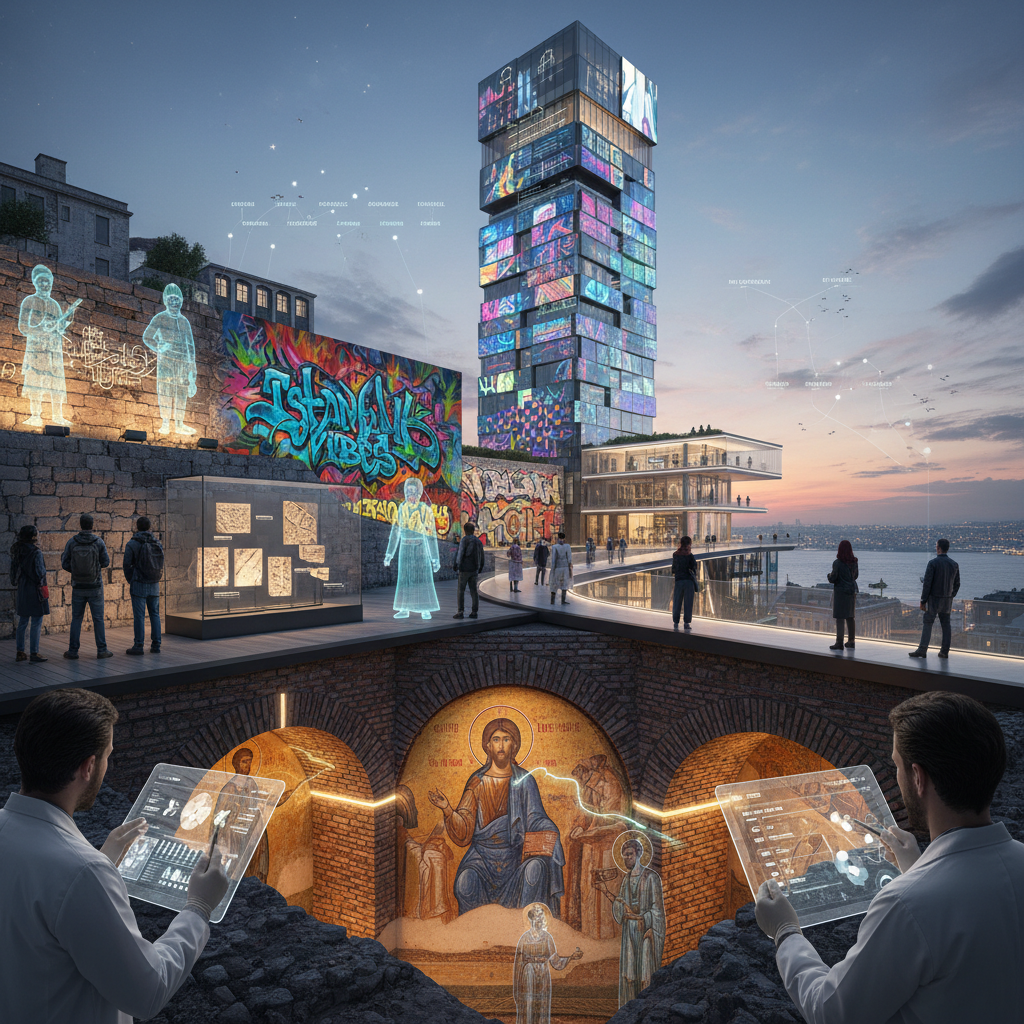
Beyond the galleries, Istanbul's streets offer a living canvas for an increasingly vibrant street art scene. From politically charged murals to imaginative graffiti, artists are transforming urban spaces into open-air exhibitions.
The Kadıköy district, in particular, has become renowned for its colorful murals and street art, drawing both local residents and tourists eager to experience this raw and immediate form of artistic expression. This contemporary movement adds another fascinating layer to the rich tapestry of Istanbul art history. For examples of international street art movements that influence Istanbul, see Street Art's Global Directory.
Conclusion: The Enduring Legacy of Istanbul Art History
From the sublime mosaics of the Byzantine Empire to the intricate tile work of the Ottomans, and from early republican painting to the cutting-edge contemporary art, Istanbul art history is a continuous narrative of adaptation, innovation, and cultural exchange. The city's art reflects its unique position at the crossroads of continents and civilizations.
As we navigate 2026, Istanbul continues to inspire artists and captivate audiences with its unparalleled artistic heritage. Whether you are exploring ancient ruins or modern art installations, the city promises an enriching and unforgettable artistic journey. Dive deeper into the city's historical layers by reviewing Britannica's overview of Istanbul's cultural life.