Istanbul's Ancient Fortifications: Unearthing Byzantine Walls, Ottoman Towers, and Hidden Defenses in 2026
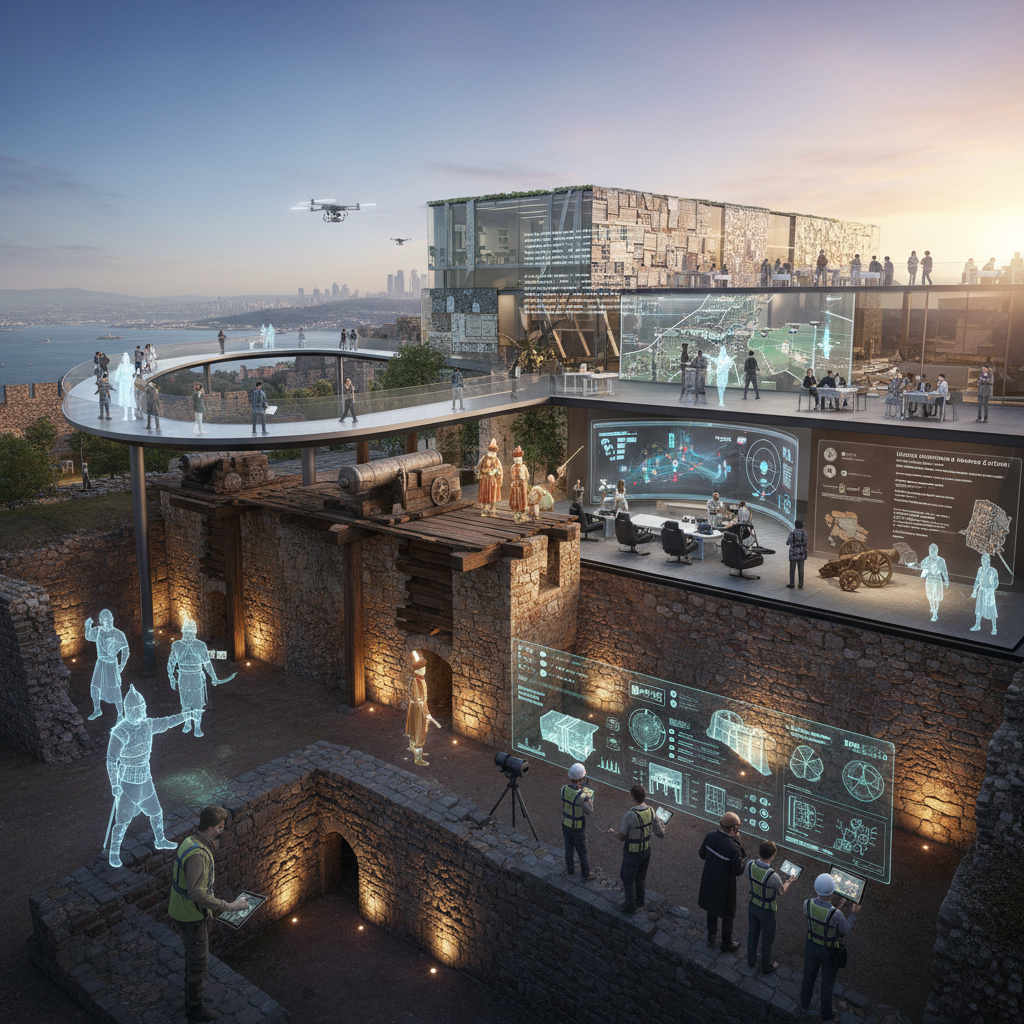
Stepping into Istanbul today, one is immediately enveloped by layers of history, but none are quite as imposing and evocative as the city's ancient defenses. The sight of the Istanbul ancient fortifications offers a tangible connection to nearly two millennia of strategic importance, colossal battles, and the rise and fall of empires. As we navigate 2026, these formidable structures continue to stand as silent sentinels, drawing millions of visitors and historians alike to uncover their secrets, from the grand Byzantine walls to the more subtle Ottoman additions and hidden defensive gems.
These majestic walls tell tales far beyond just military might; they whisper of the city's ancient narratives, the daily lives of its inhabitants, and the evolving urban fabric that makes Istanbul unique. Just as the city's physical defenses shifted with time, so too did its cultural landscape, reflected in everything from ancient culinary quests to its remarkable public libraries.
For those interested in the broader historical context, you might also find insights into Istanbul's strategic position by exploring its unique geography on Wikipedia, which elucidates why its defenses were so vital.
The Majestic Theodosian Walls: Core of Istanbul Ancient Fortifications
The undisputed crown jewel among the Istanbul ancient fortifications are the Theodosian Walls. Constructed in the 5th century under Emperor Theodosius II, these triple lines of defense were an engineering marvel of their time, stretching for approximately 6.5 kilometers from the Golden Horn to the Sea of Marmara. They were instrumental in defending Constantinople against countless sieges, allowing the Byzantine Empire to thrive for over a thousand years.
Modern-day restoration efforts, ongoing in various sections, aim to preserve this UNESCO World Heritage Site for future generations. Visitors in 2026 can explore significant portions, imagining the echoes of past armies.
Construction and Design of the Theodosian Walls
- Inner Wall: Standing at an impressive 12 meters high, flanked by 96 towers, each reaching 20 meters.
- Outer Wall: About 8.5 meters high, with another 96 smaller towers strategically placed.
- Moat: A formidable 20-meter wide and 10-meter deep ditch, further protected by a low parapet wall. This multi-layered design made the walls virtually impregnable for centuries.
Key Gates and Their Historical Significance
Many gates punctuate the Theodosian Walls, each with its own story:
- Golden Gate (Porta Aurea): Reserved for imperial triumphs, this ceremonial entrance was richly adorned with marble and gold, symbolizing the city's grandeur.
- Yedikule Gate (Seven Towers Fortress): Initially part of the Golden Gate, this formidable fortress later became an Ottoman prison and treasury, demonstrating the layered history of Istanbul ancient fortifications.
- Belgrade Gate (Silivri Gate): A major thoroughfare, witnessing countless armies and caravans pass through its arches over the centuries.
Ottoman Additions and Transformations to Istanbul Ancient Fortifications
With the conquest of Constantinople in 1453, the Ottoman Empire inherited and adapted these incredible defenses. While the Theodosian Walls were largely left to decay in many sections after their strategic importance diminished with gunpowder artillery, the Ottomans also built their own powerful fortifications to secure their new capital and control vital waterways.
These Ottoman-era Istanbul ancient fortifications often served different purposes, focusing more on naval defense and internal security rather than warding off land-based sieges.
Rumeli Hisarı: The Fortress on the Bosphorus
Built by Sultan Mehmed the Conqueror in just four months in 1452, Rumeli Hisarı was strategically placed on the European side of the Bosphorus, directly opposite Anadolu Hisarı. Its purpose was clear: to cut off naval aid to Constantinople and control all shipping traffic through the strait. The sheer speed and scale of its construction remain astounding even in 2026.
- Location: Narrowest point of the Bosphorus Strait, offering maximum control.
- Design: Featuring three distinctive large towers, each named after one of Mehmed's viziers, and interconnected by smaller curtain walls.
- Current Use: Today, Rumeli Hisarı serves as an open-air museum and hosts various cultural events, providing breathtaking views of the Bosphorus.
Yedikule Fortress: From Imperial Gate to Citadel
The Yedikule Fortress, often associated with the Theodosian Walls, is a prime example of an Ottoman repurposing of Byzantine structures. After the conquest, Mehmed II integrated four of the Golden Gate's existing towers with three new Ottoman towers, creating a formidable septagonal fortress. This structure evolved significantly from its Byzantine origins, becoming a crucial component of Istanbul's defense and administration.
Within its walls, it housed a treasury, served as a state prison for high-ranking officials and foreign ambassadors, and even became a place of execution. Exploring Yedikule offers a profound glimpse into centuries of continuous use and strategic evolution of Istanbul ancient fortifications.
Coastal Defenses: Guarding the Golden Horn and Marmara Sea
While the land walls protected the city from the west, Istanbul's extensive coastline, particularly along the Golden Horn and the Sea of Marmara, also required robust defenses. These coastal Istanbul ancient fortifications were often less imposing individually but formed a crucial network against naval assaults.
Many sections of the Sea Walls, though less complete than the Theodosian Walls inland, still stand today, particularly along the Marmara coast, offering scenic walks and a different perspective on the city's historical security.
Walls of the Golden Horn
These walls, extending from the land walls northwards along the Golden Horn, were generally lower and less formidable than the Theodosian Walls. Their primary role was to prevent enemy landings from the sheltered waters of the Golden Horn, often supplemented by a massive defensive chain stretched across the entrance during sieges. While much of this wall system has been lost to urban development, remnants can still be observed in certain areas, providing valuable insights into the full extent of Istanbul ancient fortifications.
Walls of the Marmara Sea
The Marmara Sea walls, while less continuous than their Golden Horn counterparts, were equally vital. They protected the city from naval attacks on its southern flank. Unlike the land walls, these sea walls had fewer towers and were designed to withstand coastal bombardment rather than sustained siege operations. Many sections have been incorporated into modern infrastructure, but historical sections remain a poignant reminder of the city's maritime vulnerabilities and defenses.
Hidden Defenses and Lesser-Known Fortifications of Istanbul
Beyond the grand structures, Istanbul is dotted with numerous lesser-known fortifications, watchtowers, and internal defensive elements that speak to a constant need for security throughout its history. Discovering these hidden gems can be a rewarding experience for those delving deeper into Istanbul ancient fortifications.
The Tower of Leandros (Maiden's Tower)
Nestled on a small islet at the southern entrance of the Bosphorus, the Maiden's Tower (Kız Kulesi) has a history stretching back to Byzantine times, initially serving as a lookout and customs station. Over centuries, it has been a lighthouse, a defense tower, and even a quarantine station. Its stories are steeped in legend, adding a mystical layer to Istanbul's defensive tapestry.
Recent renovations completed in 2023 have made the tower more accessible and preserved its historical integrity, attracting even more visitors in 2026. It stands as a unique example of a purely maritime defensive structure within the broader network of Istanbul ancient fortifications.
Anadolu Hisarı: Asia's Watchtower
Predating Rumeli Hisarı, Anadolu Hisarı was built on the Asian side by Sultan Bayezid I between 1393 and 1394. Though smaller, it was strategically critical for controlling the Bosphorus before the Ottoman conquest. Together with Rumeli Hisarı, it formed a choke point for hostile fleets. Its well-preserved walls and central tower offer a fascinating glimpse into early Ottoman military architecture and its role in securing access to the Black Sea.
Preserving the Legacy: Istanbul Ancient Fortifications in 2026
The continued existence and accessibility of Istanbul's ancient fortifications are a testament to ongoing preservation efforts by Turkish authorities and international organizations. These efforts ensure that the dramatic history encoded in these stones is not lost but continues to educate and inspire.
The UNESCO World Heritage status of the "Historic Areas of Istanbul," which includes the Land Walls, underscores their global importance. As we look at these magnificent structures in 2026, their significance goes beyond mere physical barriers. They are enduring symbols of human resilience, strategic brilliance, and the ceaseless march of history that has shaped one of the world's most unique cities.
Exploring these Istanbul ancient fortifications today offers more than just a historical tour; it’s an immersive journey through the epochs that shaped not only Istanbul but also much of European and Middle Eastern civilization. Whether you're a history buff, an architecture enthusiast, or simply a curious traveler, these timeless walls offer an unforgettable experience. For more on conservation efforts and historical research, consider visiting the official Istanbul Provincial Directorate of Culture and Tourism website.