Istanbul's Ancient Theaters: Unearthing Odes, Oratorios & Outdoor Spectacles in 2026
Step back in time and imagine the echoes of gladiatorial contests, dramatic plays, and public assemblies still reverberating through the ruins of Istanbul's ancient theaters. As we delve into 2026, the historical tapestry of this magnificent city continues to unveil its secrets, offering both locals and tourists an unparalleled journey through millennia of human history and cultural expression. These ancient performance spaces, once the vibrant heartbeats of thriving Roman and Byzantine settlements, stand as powerful testaments to the enduring human need for spectacle, storytelling, and community gathering. For a deeper understanding of the city's broader historical context, explore Istanbul's Ancient Guilds and Crafts, which details the economic foundations that supported such grand artistic endeavors.
The Grandeur of Istanbul Ancient Theaters and Their Roman Legacy
The Roman Empire's influence on what is now Istanbul (Constantinople) was profound, leaving behind a wealth of architectural marvels, including several grand theatrical venues. These were not merely places of entertainment but also crucial hubs for civic life, political discourse, and religious ceremonies. Understanding their construction and usage offers a unique window into the daily lives of ancient Byzantines. Further insights into the Byzantine era can be found in discussions about Istanbul's Ancient Fortunes: Unearthing Byzantine & Ottoman Economic Secrets in 2026.
Hippodrome of Constantinople: More Than a Race Track
While often remembered for its thrilling chariot races, the Hippodrome of Constantinople, now Sultanahmet Square, was also a colossal arena for public spectacles. Capable of seating tens of thousands, it hosted not just racing but also theatrical performances, gladiator fights, and imperial ceremonies. Its sheer scale dwarfed many pure theatrical venues, making it a multifaceted entertainment complex. This grand venue exemplifies the Ancient Sports & Entertainment of Istanbul.
- Location: Sultanahmet, adjacent to the Blue Mosque and Hagia Sophia.
- Original Capacity: Estimated up to 100,000 spectators.
- Key Features: Obelisks from Egypt and Greece, a serpent column, and numerous statues.
- Significance: A center for political and social life in Byzantine Constantinople.
The Lost Theaters: Uncovering Istanbul's Hidden Stages
Many Istanbul ancient theaters have succumbed to the relentless march of time, urban development, and seismic activity. However, archaeological efforts in 2026 continue to bring new insights into their locations and structures. Satellite imagery and ground-penetrating radar are proving invaluable in mapping potential sites beneath modern Istanbul.
Historians often refer to at least two major theaters within the historical peninsula that predate much of the Byzantine construction. These were likely Roman-era structures, following the classic semi-circular design with tiered seating, an orchestra, and a scaenae frons (stage building).
Byzantine Era Performances: The Evolution of Istanbul Ancient Theaters
As the Roman Empire transitioned into the Byzantine Empire, the nature of theatrical performances also evolved. While some classical forms persisted, new types of entertainment emerged, often intertwined with religious narratives and imperial propaganda. The structures themselves adapted, sometimes serving multiple purposes. Discover more about architectural transformations by reading Istanbul's Evolving Skyline: Capturing Architectural Transformations & Future Landmarks in 2026.
The Great Palace and Its Theatrical Connections
The Great Palace of Constantinople was not just the emperor's residence; it was a sprawling complex that included churches, baths, and various halls for ceremonies and entertainment. Evidence suggests that smaller, more intimate performance spaces existed within or adjacent to the palace, catering to the imperial court and its elite. These private theaters would have hosted plays, musical performances, and recitations.
The transition from pagan rituals and gladiatorial games to more 'civilized' forms of entertainment was gradual. During the early Byzantine period, while some classical plays were still performed, pantomime and mimes became increasingly popular, often incorporating music and dance.
Christianity's Influence on Performance Spaces
With the rise of Christianity, the overt paganism associated with many classical theatrical forms diminished. However, the human desire for storytelling and spectacle found new outlets. Religious dramas and liturgical plays began to emerge, often performed within church courtyards or designated open spaces rather than traditional theaters. This shift represents a significant evolution in the use of public performance areas within Constantinople. For further reading on historical narratives and rhetoric, consider Istanbul's Ancient Art of Persuasion: Rhetoric, Oratory, and Public Discourse Through the Ages in 2026.
The Church, while often critical of the 'immoralities' of classical theater, eventually embraced dramatic narratives for didactic purposes, especially during major feast days. This led to a unique blending of secular and sacred performance traditions in the Byzantine era, affecting the design and use of potential Istanbul ancient theaters.
Major Archaeological Discoveries and Ongoing Research in 2026
The vibrant history of Istanbul is constantly being unearthed. In 2026, archaeologists continue to utilize cutting-edge technology to identify and analyze sites linked to ancient performances. These efforts are crucial to understanding the full scope of Istanbul's ancient theaters.
Yenikapı Excavations: A Window to the Past
The Yenikapı excavations, initially conducted for the Marmaray railway project, revealed astonishing layers of Istanbul's past, including ancient harbors, shipwrecks, and settlement remains dating back thousands of years. While not explicitly a theater, the scale of public works and population density at Yenikapı suggests the close proximity of public entertainment venues that would have served the populace of this bustling port. For more on the city's waterways, see Istanbul's Ancient Waterways: Exploring Historic Aqueducts, Cisterns, and Fountains in 2026.
Further analysis of artifacts and structural remnants from Yenikapı might still yield clues about performance traditions or temporary stages used for festivals and public gatherings in ancient times. The city's continuous habitation has meant that older structures are often built over, making systematic archaeological study challenging but incredibly rewarding. You can explore the official Yenikapı Archaeological Park website for more detailed information.
Digitization and Virtual Reconstructions of Istanbul Ancient Theaters
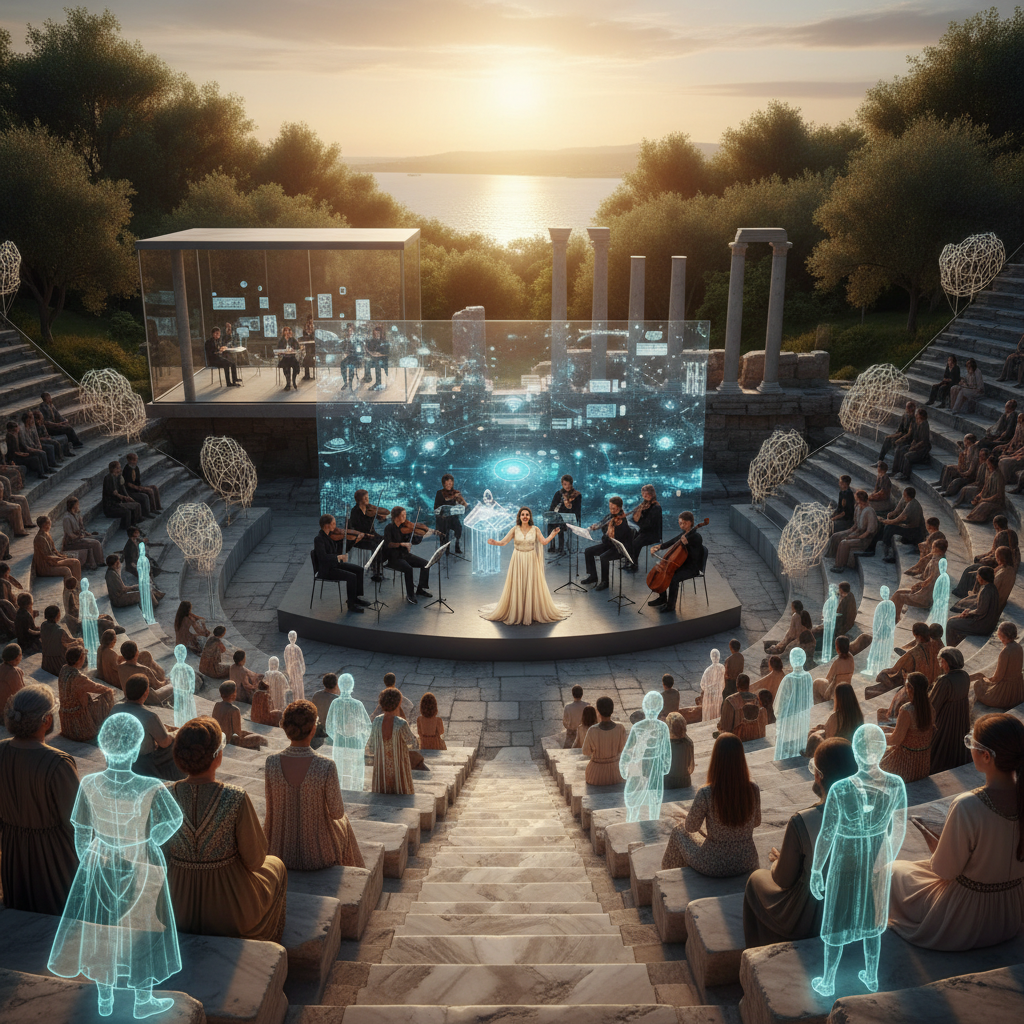
One of the exciting developments in 2026 is the increasing use of digital archaeology and virtual reality to reconstruct ancient sites. Researchers are collaborating to create immersive 3D models of what the grand theaters and hippodromes might have looked like, allowing the public to 'walk through' these spaces digitally. This technology is vital for preserving and presenting the heritage of Istanbul ancient theaters to a global audience.
These virtual reconstructions are based on existing archaeological data, historical texts, and comparative analysis with well-preserved theaters in other ancient cities. They offer an unprecedented opportunity to visualize the scale and grandeur of these lost architectural wonders and appreciate the cultural life they once supported. Learn more about technological advancements shaping the future of the city at Istanbul's 'Future Echoes': Unveiling Tomorrow's City Through Innovation & Sustainable Design in 2026.
Visiting the Vestiges: Experiencing Ancient Performance Spaces Today
While intact theaters are rare, the remnants of Constantinople's grand entertainment venues remain powerful places to visit. Experiencing these sites in 2026 offers a tangible connection to the city’s deep historical roots.
The Sultanahmet Square (Hippodrome) Experience
Today, Sultanahmet Square is a bustling public space, but its ancient role as the Hippodrome is evident in the remaining monuments: the Obelisk of Theodosius, the Serpent Column, and the Walled Obelisk. Standing in this vast area, one can easily imagine the roar of the crowds and the spectacle of ancient events. Interpretive signs and nearby museums provide context to its glorious past.
- Must-See Elements: The three central monuments, the Spina area (central divider of the racecourse).
- Best Time to Visit: Early morning or late afternoon to avoid crowds and experience cooler temperatures.
- Nearby Attractions: Hagia Sophia, Blue Mosque, Topkapi Palace – all within walking distance.
Future Prospects for Unearthing More Ancient Theaters in Istanbul
The urban sprawl of Istanbul makes large-scale archaeological digs challenging. However, ongoing infrastructure projects, like new metro lines and urban regeneration, often provide windows of opportunity for archaeological teams. Every new excavation holds the potential to reveal previously unknown structures, including more evidence of Istanbul ancient theaters.
The commitment to preserving Istanbul's rich heritage remains strong. With continued research, international collaborations, and the application of cutting-edge technology, the stories of these magnificent ancient performance spaces will continue to be told and perhaps, even rediscovered, for generations to come. The enduring legacy of Istanbul ancient theaters reminds us of the universal human desire for art, entertainment, and shared experience. For further context on archaeological findings and preservation efforts in Turkey, a good external source is the Turkish Ministry of Culture and Tourism's website on cultural heritage.