Istanbul Transportation Guide: Your Ultimate Transit Companion for 2026
Welcome to Istanbul, a city where ancient history seamlessly blends with future-forward innovation! Navigating this sprawling metropolis can seem daunting at first, but with this comprehensive Istanbul transportation guide, you'll master its intricate network like a seasoned local. Whether you're here to explore historical sites, indulge in vibrant street food, or conduct business, understanding Istanbul's transport options is key to a smooth and enjoyable experience in 2026. For those planning a longer stay or an immersive experience, consider exploring Istanbul's Time-Traveling Trails to truly journey through eras within this remarkable city.
Getting Started: Essential Tools for Your Istanbul Transportation Guide Journey
Before you even step on a tram, equip yourself with the right resources. Istanbul's public transportation system is modern and efficient, offering a variety of choices to suit every traveler and budget. Planning ahead will save you time and hassle when using Istanbul transportation.
The IstanbulKart: Your All-Access Pass
- The IstanbulKart is a rechargeable contactless smart card used for all public transportation, including metros, trams, buses, metrobuses, and even some ferries. It's an absolute must-have for navigating Istanbul.
- You can purchase IstanbulKarts at vending machines located at most metro and tram stations, major bus stops, and kiosks.
- Top-up machines are widely available. Remember to load enough credit for your anticipated journeys. In 2026, digital top-up options via mobile apps are also becoming more prevalent, making your Istanbul transportation experience even smoother.
Mobile Apps for Seamless Navigation
Several mobile applications can significantly enhance your travel experience. Download these before you arrive to optimize your Istanbul transportation:
- Moovit or Citymapper: These apps provide real-time public transport information, route planning, and estimated travel times.
- Google Maps: While good for general navigation, cross-reference with dedicated public transport apps for the most accurate real-time data in Istanbul.
- BiTaksi/Uber: For private car hires, these services are widely used and convenient, especially late at night or when carrying luggage, offering another Istanbul transportation option.
Mastering Istanbul's Rail and Road Network
The backbone of Istanbul’s public transport is its extensive rail and road network, constantly expanding and improving. Our Istanbul transportation guide focuses on the most popular and efficient options for getting around this vibrant city.
The Metro System: Fast and Far-Reaching
Istanbul's metro is a clean, modern, and increasingly vast network, ideal for covering long distances quickly and avoiding traffic congestion. Key lines connect major areas, making it a vital part of Istanbul transportation:
- M1A/M1B (Red Line): Connects Atatürk Airport (now mostly cargo, but nearby areas are accessible) and Esenler Otogar (main bus terminal) to Yenikapı.
- M2 (Green Line): A crucial line connecting Yenikapı to Hacıosman, passing through Taksim, Şişli, and Levent – major tourist and business districts.
- M3 (Blue Line): Connects Kirazlı to Kayaşehir Merkez, serving primarily residential areas but with connections to other lines.
- M4 (Pink Line): Located on the Asian side, connecting Kadıköy to Sabiha Gökçen Airport, a vital link for those flying into or out of SGK. Speaking of the Asian side, don't miss our guide to Istanbul's Anatolian Side for unique photo opportunities and charm.
- M5 (Purple Line): From Üsküdar to Çekmeköy, the first fully automated metro line in Istanbul, offering stunning views from Üsküdar.
- M7 (Magenta Line): Serves the western parts of the European side, connecting Mahmutbey to Mecidiyeköy and further extensions planned for 2026.
- M9 (Orange Line): Connects Bahariye to Olympic, important for sports and exhibition centers.
All metro lines are integrated, allowing for easy transfers with a single IstanbulKart swipe, simplifying your Istanbul transportation.
Trams: Scenic Journeys Through Historic Istanbul
Trams offer a charming and often scenic way to travel, especially through the city's historic core. They are perfect for sightseeing and avoiding underground journeys when you want to see the city, providing a unique Istanbul transportation experience.
- T1 (Bağcılar-Kabataş Tram Line): This is arguably the most important line for tourists. It passes by iconic landmarks such as Sultanahmet Mosque, Hagia Sophia, Grand Bazaar, Spice Bazaar, Galata Bridge, and Dolmabahçe Palace.
- T3 (Kadıköy-Moda Nostalgic Tramway): A charming circular route on the Asian side, perfect for exploring the vibrant Kadıköy and Moda districts.
- T4 (Topkapı-Mescid-i Selam Tram Line): Connects the historical Topkapı area to more residential neighborhoods.
- T5 (Alibeyköy-Eminönü Tram Line): A relatively newer line running along the Golden Horn, offering access to beautiful parks and historical sites.
Trams can get crowded, especially during peak hours, but their convenience for accessing major attractions is unparalleled for Istanbul transportation.
Buses and Metrobuses: Extensive and Efficient
Istanbul’s bus network is vast, covering virtually every corner of the city. While slower due to traffic, buses are ideal for reaching destinations not served by rail, expanding your Istanbul transportation options.
- Standard Buses: Operated by IETT, these green or blue buses are plentiful. Use your IstanbulKart.
- Metrobuses: These are high-capacity, articulated buses operating on dedicated lanes (BRT - Bus Rapid Transit) that run on an expressway. They are incredibly efficient for crossing the city quickly, especially between the European and Asian sides, avoiding heavy traffic.
- Expect metrobuses to be very crowded during rush hour, but they are a lifesaver for commuting between distant points, making them a key part of Istanbul transportation.
Ferries and Marmaray: Crossing the Bosphorus with Ease
Part of the magic of Istanbul is its unique geography. Our Istanbul transportation guide wouldn't be complete without highlighting the various ways to cross the Bosphorus Strait, offering essential Istanbul transportation insights.
Bosphorus Ferries: A Timeless Experience
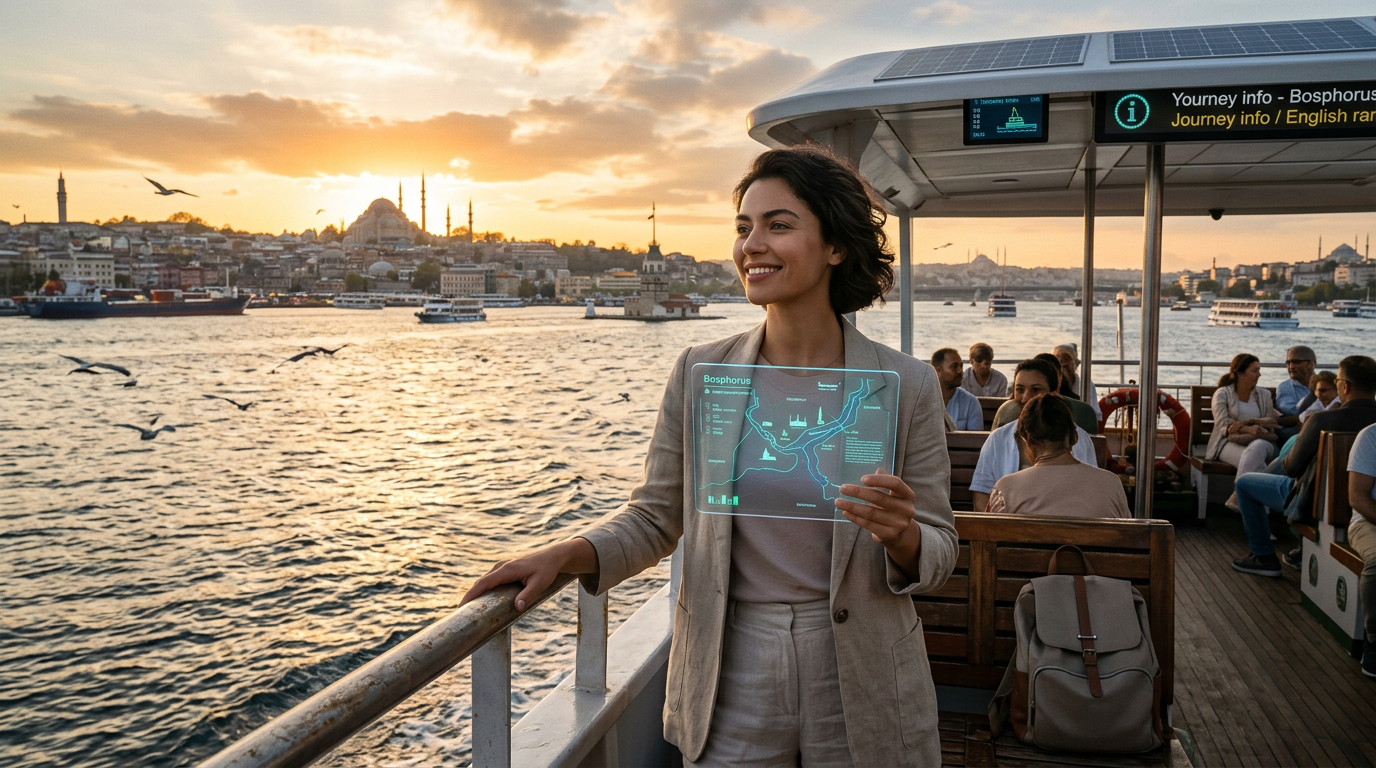
Taking a ferry across the Bosphorus is not just transportation; it's an experience in itself. Enjoy stunning cityscapes, fresh sea air, and often a cup of Turkish tea. Ferries connect:
- European Side: Eminönü, Karaköy, Beşiktaş, Kabataş
- Asian Side: Kadıköy, Üsküdar, Bostancı
Regular commuter ferries are efficient and affordable, offering picturesque views at a fraction of the cost of tourist cruises. The IstanbulKart works here too! For a deeper dive into exploring the strait, read our guide on Istanbul's Bosphorus Beat: Navigating the Strait's Charms by Land and Sea, enhancing your Istanbul transportation knowledge.
Marmaray: The Underwater Rail Link
The Marmaray is a crucial underground and undersea rail line connecting the European and Asian sides of Istanbul. It's a marvel of modern engineering, providing rapid transit beneath the Bosphorus. It integrates with the metro system at Yenikapı, Sirkeci, and Üsküdar, making cross-continental travel incredibly fast and convenient, especially for daily commuters and travelers heading to or from Gebze/Halkalı, and a key component of Istanbul transportation.
Navigating to and from Istanbul's Airports in 2026
Istanbul is served by two main international airports, and understanding how to get to and from them is crucial for your Istanbul transportation plan:
Istanbul Airport (IST): The Main Hub
Located on the European side, Istanbul Airport is one of the world's largest. Getting to and from IST is straightforward with various Istanbul transportation options:
- Havaist Airport Buses: These luxury buses offer comfortable, direct transfers to numerous key points across Istanbul, including Taksim, Beşiktaş, and Sultanahmet. They operate 24/7. Use your IstanbulKart or credit card. Information regarding routes and schedules can be found on the official Havaist website.
- M11 Gayrettepe-Istanbul Airport Metro Line: This recently completed metro line offers the fastest connection between the city center (Gayrettepe, where it connects to M2) and IST. It significantly reduces travel time and is highly recommended for efficient Istanbul transportation.
- Taxis/Private Transfers: Available 24/7. Agree on a price or ensure the meter is used. Private transfer services can be pre-booked for peace of mind.
Sabiha Gökçen Airport (SAW): Asian Side Gateway
SAW primarily serves budget airlines and is located on the Asian side, offering its own set of Istanbul transportation options.
- Havabus Airport Shuttle: Similar to Havaist, these shuttles connect SAW to popular spots on both the Asian side (Kadıköy) and European side (Taksim). Details are available via the Havabus website.
- M4 Kadıköy-Sabiha Gökçen Airport Metro Line: This metro line provides a direct and efficient connection between Kadıköy and SAW, making travel much easier for those on the Asian side or wanting to avoid traffic.
- Taxis/Private Transfers: Readily available.
Tips for a Smooth Istanbul Transportation Guide Experience
To make the most of your travels around this magnificent city, keep these additional tips from your ultimate Istanbul transportation guide in mind:
- Peak Hours: Avoid traveling during rush hours (generally 07:00-09:30 and 17:00-19:30 on weekdays) if possible. Public transport, especially metrobuses and main metro lines, can be extremely crowded.
- Walking is Exploring: For short distances, especially in historical areas like Sultanahmet, walking is often the best way to soak in the atmosphere and discover Istanbul's Hidden Gems.
- Taxis: While plentiful, be cautious. Ensure the driver uses the meter (taksimetre) or agree on a fair price beforehand. Ride-sharing apps like BiTaksi and Uber provide more transparency. For fare estimates, you can refer to services like Istanbul Taxi Fare Calculator.
- Public Toilets: Public transport stations sometimes have public toilets, but they may require a small fee. Carry small change.
- Stay Connected: Free Wi-Fi is rarely available on public transport. Consider a local SIM card or a portable Wi-Fi device for continued connectivity, enhancing your overall Istanbul transportation experience.
With this comprehensive Istanbul transportation guide, you are now well-prepared to navigate Istanbul's diverse transport landscape in 2026. Enjoy your journey through this captivating city!