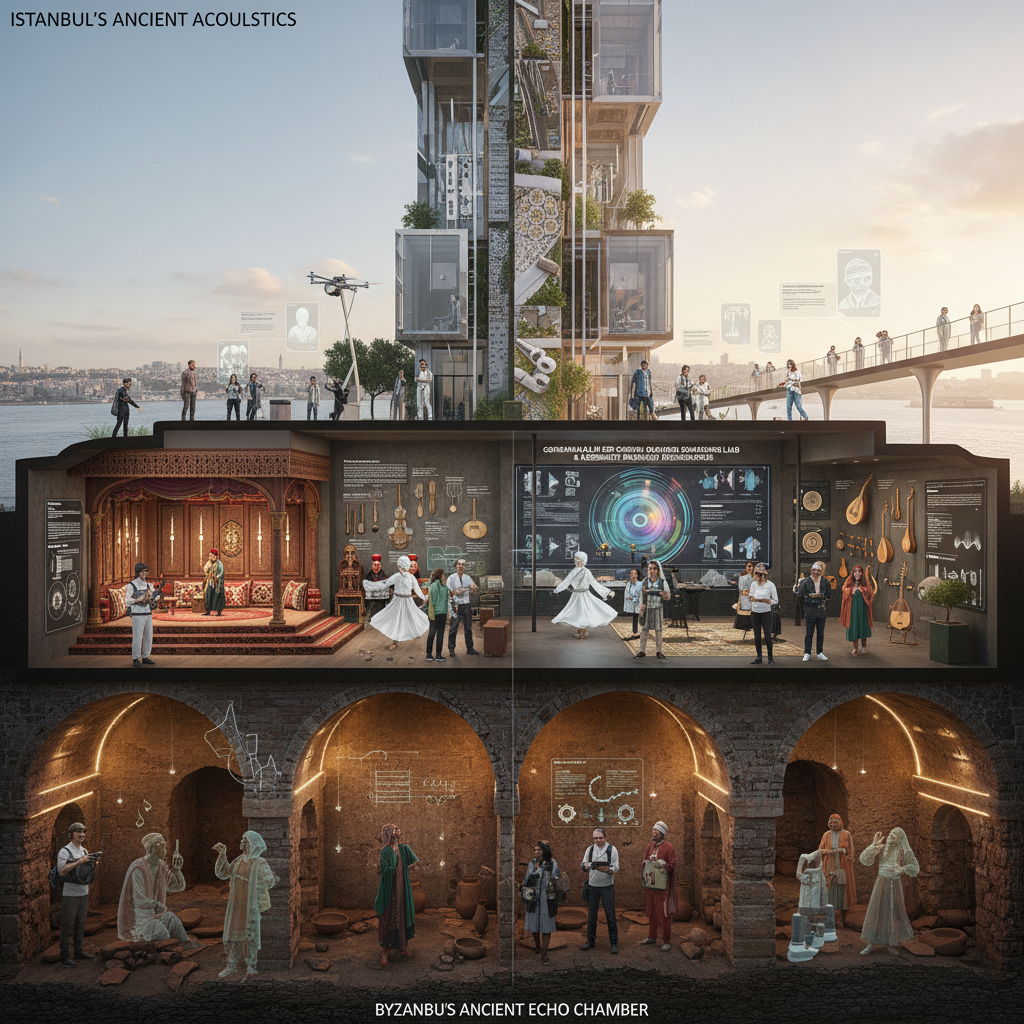
Istanbul Ancient Acoustics: Unearthing Forgotten Sounds & Sonic Landscapes
Step back in time and discover the captivating world of Istanbul ancient acoustics. For centuries, the majestic city, formerly known as Constantinople, has been a melting pot of cultures, religions, and architectural marvels. Beyond the visible grandeur, a rich tapestry of sounds once filled its streets, echoing through grand basilicas, bustling bazaars, and hidden cisterns. Researchers and enthusiasts are continually exploring how these historical acoustic environments shaped daily life, spiritual experiences, and artistic expressions. This deep dive uncovers the forgotten sonic landscapes that defined one of the world's most historically significant cities, focusing on the unique aspects of Istanbul ancient acoustics.
The Echoes of Empire: Understanding Istanbul Ancient Acoustics
The study of Istanbul ancient acoustics provides a unique lens through which to understand the Byzantine and Ottoman Empires. Early engineers and architects, often unknowingly, designed structures with incredible acoustic properties. These weren't mere accidents; they often reflected a deep understanding of sound propagation, particularly in religious spaces where the spoken word, chanted prayers, and musical performances held immense significance.
From the cavernous reaches of the Hagia Sophia to the intricate design of Ottoman mosques, sound played a crucial role in the social and spiritual fabric of the city. Modern acoustic modeling techniques, combined with historical texts and archaeological findings, are helping us reconstruct these lost soundscapes. For more on the city's rich musical heritage, explore Istanbul's Ancient Melodies: Unearthing Byzantine Choirs, Ottoman Miniatures & Modern Soundscapes in 2026.
Hagia Sophia: A Masterclass in Reverberation
The Hagia Sophia stands as a paramount example of sophisticated acoustic design. Its massive dome and strategic use of materials created a unique reverberant quality that amplified prayers and chanting. This incredible acoustical environment was not only aesthetically pleasing but also served a practical purpose, making sermons audible to large congregations.
- Domed Structure: The vast dome acted as a natural sound reflector, distributing sound evenly throughout the immense space.
- Material Choices: The combination of marble, brick, and mosaic surfaces contributed to specific sound reflections and absorption, creating an optimal reverberation time.
- Spatial Layout: The open, centralized design allowed sound to travel without significant impediment, ensuring clarity for all within.
The Blue Mosque and Ottoman Harmony
Later, Ottoman architects, like the celebrated Mimar Sinan, continued to innovate in acoustic engineering. The Blue Mosque (Sultan Ahmed Mosque) exemplifies this, with its carefully chosen proportions and domed structure designed to enhance the voice of the imam and the muezzin's call to prayer. The acoustics in these mosques were integral to the spiritual experience, fostering a sense of community and devotion, showcasing the depth of Istanbul ancient acoustics.
Reconstructing the Soundscape: Methodologies
The methodologies for studying Istanbul ancient acoustics have become incredibly advanced. Researchers are no longer solely reliant on historical descriptions but can employ cutting-edge technologies to simulate and recreate past sonic environments. This interdisciplinary approach combines architectural history, archaeology, digital modeling, and psychoacoustics.
One of the most exciting developments is the use of virtual reality (VR) and augmented reality (AR) to experience these reconstructed soundscapes firsthand. Imagine walking through the ancient Hippodrome, hearing the roar of the crowd and the clatter of chariot races as if you were there centuries ago, much like exploring Istanbul's Ancient Games & Modern Esports: From Byzantine Hippodromes to 2026's Digital Arenas.
Acoustic Modeling and Simulations
Specialized software is used to create 3D acoustic models of ancient structures. These models take into account:
- Architectural dimensions and geometry
- Material properties (e.g., stone, wood, plaster)
- Sound source locations (e.g., speaker, musician)
- Environmental factors (e.g., open-air vs. enclosed spaces)
The results allow researchers to predict how sound would have behaved within these spaces, providing invaluable insights into their intended use and impact on Istanbul ancient acoustics.
Archaeological Evidence and Historical Texts
Archaeological digs continue to uncover remains of ancient buildings, providing crucial data on their layouts and construction. Coupled with historical texts – such as travelogues, religious accounts, and architectural treatises – these discoveries help inform the acoustic models. For instance, descriptions of Byzantine church choirs or Ottoman court musicians offer clues about performance practices and desired acoustic effects. Delve deeper into the city's hidden past by exploring Istanbul's Ancient Palimpsest: Unearthing Layers of Forgotten Cities Beneath the Modern Metropolis in 2026.
The Social and Cultural Impact of Istanbul Ancient Acoustics
The sonic environment profoundly shaped the social and cultural life of Istanbul. From public proclamations in the forums to the intimate recitations in private homes, sound was a fundamental aspect of daily existence. The study of Istanbul ancient acoustics helps us understand not just how places sounded, but how those sounds influenced human behavior, ritual, and communication.
Think about the bustling Grand Bazaar, where the cacophony of vendors, the haggling of merchants, and the diverse languages created a unique auditory signature. Or consider the solemnity generated by the acoustics of a mosque during the call to prayer, unifying the faithful across the city.
Ritual and Performance
Religious rituals, ceremonies, and musical performances were heavily influenced by the acoustic properties of their venues. The resonance of a large church could enhance the spiritual power of a choir, while the controlled acoustics of a smaller Sufi lodge might foster a more meditative experience. Understanding these relationships is key to appreciating the full depth of Byzantine and Ottoman artistic and spiritual life, especially concerning Istanbul ancient acoustics.
Public Life and Communication
In a city without modern amplification, effective communication in public spaces was paramount. The design of plazas, arenas, and administrative buildings often considered how voices could carry across crowds. This aspect of Istanbul ancient acoustics highlights the ingenuity of past urban planners and engineers in facilitating civic engagement and governance. Insights from such studies are often published in academic journals like The Journal of Environmental Psychology or presented at conferences by leading researchers in architectural acoustics, such as those associated with the Acoustical Society of America.
Preserving and Presenting the Sonic Past
As we move further into the 21st century, there's a growing imperative to preserve and present the intangible heritage of sound, alongside physical structures. Initiatives aim to bring the sounds of ancient Istanbul to a wider audience, ensuring that future generations can appreciate this rich auditory history of Istanbul ancient acoustics.
This includes:
- Digital Archives: Creating comprehensive databases of acoustic simulations, historical sound recordings (where available), and related research.
- Interactive Museum Exhibits: Developing immersive experiences that allow visitors to "hear" how ancient Istanbul once sounded.
- Educational Programs: Integrating the study of ancient acoustics into architectural, historical, and cultural curricula.
Challenges and Future Directions
While significant progress has been made, challenges remain. Accurately modeling the effects of long-lost furnishings, textiles, and crowd noise on acoustics is complex. Future research will likely focus on even more detailed material modeling, incorporating psychoacoustic studies to better understand the subjective human experience of these ancient soundscapes, and expanding AR/VR applications for truly immersive reconstructions of Istanbul ancient acoustics. For a deeper understanding of soundscape ecology and its relevance to historical cities, resources from organizations like the World Listening Project offer valuable perspectives.
By continuing to explore the rich domain of Istanbul ancient acoustics, we unlock a new dimension of understanding this magnificent city, bringing its forgotten past vibrantly to life in the present day and for the future.